
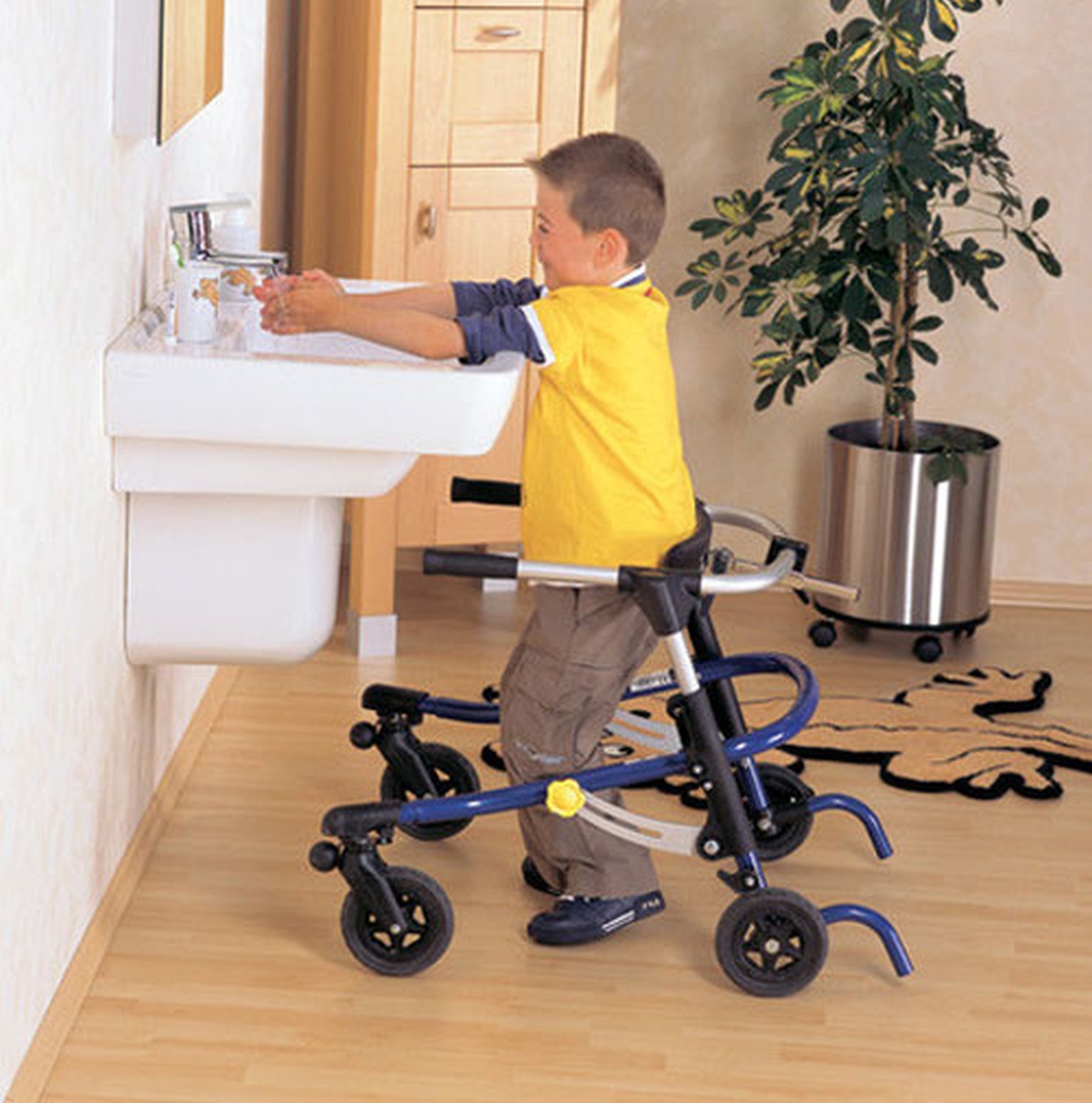
Orthotics For Children With Cerebral Palsy
Children living with cerebral palsy have a wide variety of needs. Orthotic devices have the potential to make a world of difference for children with cerebral palsy, especially when the process is carefully approached and the correct amount of support and assistance are provided for the child. Not all children with cerebral palsy will qualify for orthotics, but the ones that do often experience successful outcomes.
How Orthotics For Children With Cerebral Palsy Can Improve Their Lives
Orthotic braces can be customized to alleviate discomfort from a wide variety of conditions, including both low and high tone pronation, erratic movements, drop footedness, inversion, eversion, and subluxation of the hips and knees. Certain deformities can be corrected, or at the very least, limited. Early use of orthotic braces may be able to prevent deformities.
Most orthotic devices can promote or assist in mobility, giving children with cerebral palsy greater independence. With precise orthotics, they will be able to accomplish more on their own.
What Can Be Achieved Through The Use Of Orthotics?
Since cerebral palsy takes a significant toll on joints and muscles, walking has a tendency to be complicated for the children who live with it. Despite these difficulties, the majority of children with cerebral palsy do have the ability to walk – as many as 66% of children just need a little extra help to get going.
Orthotics can be used to improve gait and fluidity of motion. Where the joints and muscles may not be efficiently cooperative, orthotic devices can make up the difference. Since the orthotics do some of the work for the child, it’s easier for the child to stand and sit without great physical effort.
Orthotics overall are able to help with bone alignment, as well as muscle strength and balance. Spasticity is experienced by the overwhelming majority of children with cerebral palsy, and orthotics can be designed to improve things like coordination and endurance in children with spastic muscular movement.
Are Orthotics Right For My Child With Cerebral Palsy?
Orthotic devices are typically used as a supplement to other medical treatments. Your child’s pediatrician and pediatric surgeon will come together to create a plan of treatment for your child with cerebral palsy. This treatment involves a full assessment, and the pediatric surgeon might recommend surgical treatment options.
Many children with cerebral palsy will benefit from orthotics whether or not they need surgical procedures. Your child’s doctors will know whether or not your child will benefit from orthotics, though most children with cerebral palsy who are able to walk are excellent candidates for custom devices.
How Are Children With Cerebral Palsy Fitted For Orthotic Devices?
Orthotic device designers will work with your child’s doctors to determine a plan based on his or her specific needs. Some general fit orthotic devices will work for children with minor needs. Children with severe or unique circumstance surrounding their cerebral palsy may need custom devices.
The pediatric surgeon will make recommendations based on the full assessment of your child, and the device designers will create a piece specifically for your child. Once these pieces are created, they need to be properly fitted. Adjustments may need to be made to elevate the comfort and effectiveness of these devices.
Your child’s body will need to become accustomed to using the device. This means he or she won’t begin wearing it full time right from the start. Doctors will create a plan to properly acclimate your child to the device. This device will become an important part of your child’s physical therapy plan, where the physical therapist will help your child learn to use the device properly.
If the device needs to be fine-tuned throughout the process, adjustments will be made as needed. The end goal is to create a perfect harmony between the child with cerebral palsy and his or her orthotic devices.
The Ongoing Process Of Maintaining And Adjusting Orthotics
Children are still growing, which means that their initial orthotic devices will only take them so far. As your child grows, new devices will need to be created to accommodate that growth. All children grow at different rates, and children with cerebral palsy have physical support needs that shift with time.
Regular appointments with your child’s doctor and physical therapist will allow you to determine when an old device needs to be replaced. Prompt action in modifying or replacing orthotic devices assures the fluidity of your child’s progress. The sooner your child receives updated orthotics, the less disruption they will experience.
Please call Tony Martin Limb & Brace today for your free initial consultation.